Cross Country Footing: Acorns, Burs, Wet Leaves
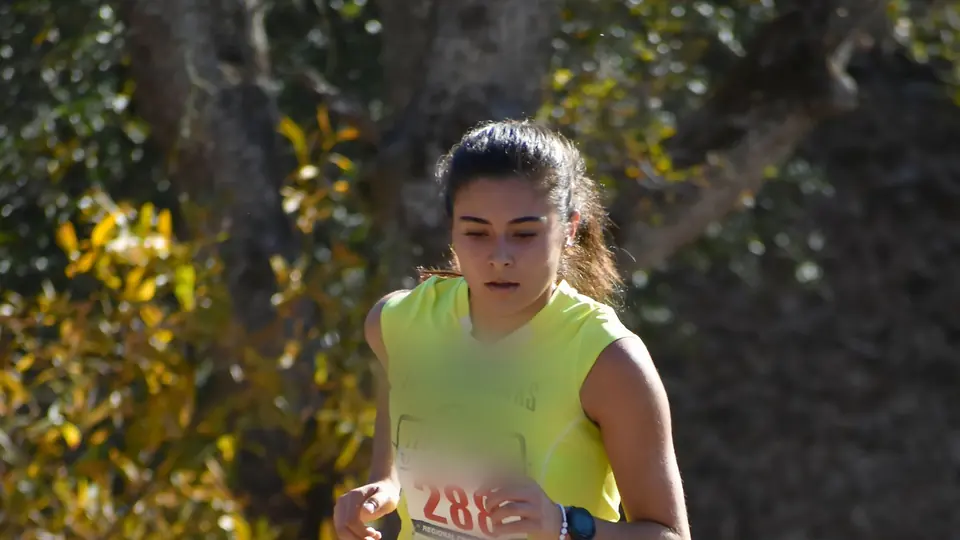
Cross country season runs from August into November, the same weeks oaks, hickories and beeches drop their nuts. Courses go through parks, golf courses and woods, so a stretch under a big oak can be covered with acorns in October and bare the next fall. None of it shows up in the course map or the results, but it decides where a runner can push and where they should just keep their feet.
What falls during cross country season
The timing below comes from Blue Whale Trees' key to what eastern trees drop, a native tree nursery's guide to the nuts, burs, balls and pods on the ground, read on October 21, 2026. The last column is what each one does to a runner.
| Tree | What it drops | When it falls | Underfoot |
|---|---|---|---|
| Red oaks, such as northern red oak | Acorns | Late August to October | Rolls under a planted foot |
| White oaks | Acorns | September and October | Rolls under a planted foot |
| Shagbark hickory, pecan | Hard nuts in a husk that splits in four | September and October | Bigger and harder than an acorn |
| American and Chinese chestnut | A bur 2 to 3 inches across with very sharp spines | September and October | Sharp enough to matter in thin flats |
| Osage orange | A wrinkled green ball 4 to 5 inches across | September and October | Big enough to turn an ankle |
| Ohio buckeye | A prickly husk around a glossy seed | September and October | Rolls like an acorn |
| American beech | A prickly bur with two small nuts | September to November | Small, prickly, often in drifts |
| Black walnut | A round green husk up to 2 inches | After the leaves drop | Heavy and slick once it rots |
Sweetgum, the tree with the hard spiky balls, mostly drops them from December to April, so on park loops they are a winter and spring problem for distance runners more than a race day one.
Why the same course changes from year to year
Oaks, hickories and beeches bear in booms. The same nursery's guide to mast years describes a mast year as a fall when a region's oaks, hickories or beeches all bear a heavy crop together, after years of little or none, and says most oaks have one every three or four years. It gives white oak yields in Illinois from about 3 to about 1,450 pounds of acorns per acre. Crops can keep in step across populations more than 600 miles apart, so a mast year hits most courses in a region at once.
That is why last year's notes on a course can be useless. A turn that was clean at the 2025 invitational can be covered at the 2026 one.
Walk the course with this in mind
- Mark the covered stretches. On the course walk, note where the route passes under oaks, hickories and chestnuts, and look hardest at the turns and downhills, where you plant and push off.
- Run the line that is clear. A slightly wider line through a turn on clean ground beats the tangent through a carpet of acorns.
- Shorten up through covered ground. Spikes grip wet grass and mud. They do nothing about a round nut rolling under your forefoot. A shorter stride with your feet under you costs less than a rolled ankle.
- Watch the leaves. Wet leaves hide roots, holes and nuts, and they are slick wherever the course crosses pavement or a bridge.
- Warm up on the bad stretch. A few strides through the covered section tell you more than looking at it.
- Check the spike rules. Meets and venues set their own limits on spike length and on spikes over pavement, and the meet information says which apply.
For coaches and meet hosts
A leaf blower or a rake clears the worst stretches the morning of a meet, and the turns and the chute matter most. If a section cannot be cleared, mark it on the course map and say so at the coaches' meeting.
Why this matters for your times
Course conditions are one reason cross country times do not compare across courses, or even across years on the same course. That is also why there is no cross country recruiting standard that holds up, and why coaches read a 5K time next to the course and the conditions. When you post a cross country mark, put the course and the conditions next to it.
Read next: how to get recruited for track and field, good mile times by age and grade, and indoor vs outdoor track.